

If you have spent any time browsing Amazon or Google for a home EV charger, you probably feel overwhelmed. Hundreds of generic white boxes claim to be the "fastest," "smartest," or "safest."
But in this crowded, noisy market, what really matters is choosing a charger you can trust.
When you type best level 2 charger into a search engine, you aren't just looking for a product. You are looking for confidence. You want to know that the device you bolt to your garage wall will work every single morning, keep your house safe, and handle whatever electric vehicle you buy next.
After years of analysing what really matters in this industry, I've found that only five criteria determine the best home charger—ignore the marketing hype and focus on these.
Here’s exactly what sets top-tier hardware apart—and how we engineered IYILO to lead in every category.

1. Just the right amount of power output (Why Flexibility Wins)
The first question every buyer asks is: "How fast is it?"
You will see chargers rated at 32, 40, and 48 amps.
- 32A: A bit slow for modern, large-battery EVs (like a Rivian or Ford Lightning).
- 40A: The standard power rate for home EV chargers with NEMA 14-50 plugs, a common electrical outlet for appliances and chargers. This is very fast and convenient for most users.
- 48A: The maximum charging speed most home electrical systems can handle. Units that use this power level usually need to be hardwired, meaning they are permanently connected to your home's wiring by an electrician (not just plugged into an outlet).
So, which is the best? The answer is: The one that can do both.
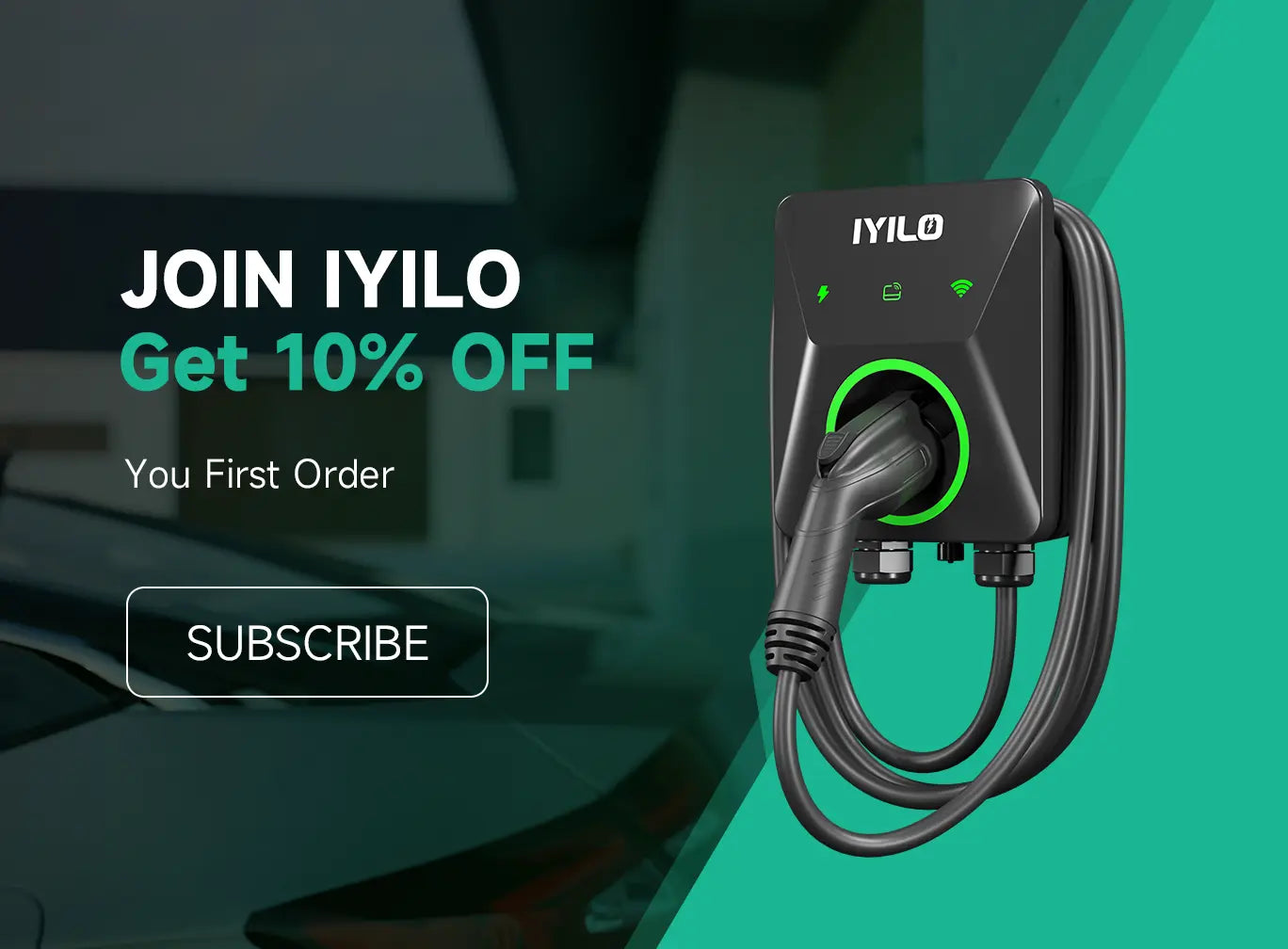
That’s why we designed the IYILO Level 2 Charger with a dual-mode system.
Out of the box, it has a NEMA 14-50 plug (40A)—perfect for most users. Just plug it in. Unlike cheaper competitors, IYILO can handle 48 amps. If you want maximum hardwired speed later, your electrician will remove the plug and flip a switch.
The best charger adapts as your needs change.
2. Safety That Isn't Just a Sticker
This is non-negotiable. You’re transferring large amounts of electricity to your car for 6–8 hours, often while your family sleeps upstairs.
The market is flooded with cheap, uncertified chargers that pose a fire hazard. To qualify as the best level 2 charger, a unit must be ETL-certified (safety-tested by Electrical Testing Laboratories) or UL-listed (approved by Underwriters Laboratories, a global safety certification company).
This means a Nationally Recognised Testing Laboratory (NRTL) has tortured the device—overheated it, shocked it, dropped it—to ensure it won't fail catastrophically. The IYILO EV Charger proudly carries the ETL mark.
But we went further: we integrated NTC temperature sensors in the charging handle and plug. It's a feature many "premium" brands skip. If the plug overheats due to a dirty outlet, our charger senses it and cuts power instantly. That's active safety, not just passive safety.
3. "Smart" Features That Actually Pay for Themselves
A dumb charger is just a glorified extension cord. A smart charger is an investment tool.
Your provider likely uses Time-of-Use rates: $0.35/kWh at 6 PM, $0.12/kWh at 2 AM.
If you plug in your car after work and it starts charging immediately, you burn money. The best level 2 charger should have a robust, Wi-Fi-enabled app that makes scheduling easy.
With the IYILO App, you plug in, walk away, and forget about it. The charger waits until the cheap rates kick in, effectively cutting your "fuel" bill in half. We also provide detailed data logs so you can see exactly how much energy you've used and what it costs. If a charger can't help you save money on your electric bill, it doesn't deserve a spot on your wall.
4. Weatherproofing: NEMA 4 vs. NEMA 3
Here is a technical detail that catches many people off guard.
Most mid-range chargers have a NEMA 3R "Rainproof" rating—fine for covered carports or garages, but unsealed against dust or snow.
If you live in a harsh climate or if you plan to install your charger on an exposed driveway, NEMA 3R isn't enough.
The IYILO Charger is rated NEMA 4, which means it is watertight. Spray it with a hose, and the electronics stay dry. It blocks dust, dirt, snow, and rain. When buying the best, durability counts. The weather shouldn’t be a worry.
5. Universal Compatibility (The J1772 Standard)
Finally, the best charger is the one that works with any car in your driveway.
The industry standard in North America is the J1772 connector. This is a specific plug design and communication protocol used by Ford, Hyundai, Kia, Rivian, Volkswagen, BMW, and virtually every other non-Tesla EV.
"But what about Tesla?" I hear you ask.
Tesla owners actually benefit from a J1772 charger like IYILO, too. Every Tesla comes with a simple adapter. By installing a J1772 station, you ensure your home is ready for friends, family, or your next car, which might not be a Tesla. It is the universal language of EV charging.
The Verdict: Why IYILO is the Smart Choice
Stack up requirements like flexibility, certified safety, smart ROI, durability, and universal fit, and few chargers qualify.
And when you add "Reasonable Price" to that list? The list gets even shorter.
We built the IYILO EV Charger to address a market gap. You shouldn't have to pay $700+ for a brand-name to get safety and smart features, or settle for a dangerous, basic charger to save a few bucks.
IYILO delivers the power you need today, upgrade options for tomorrow, and uncompromising safety always—the clearest smart choice.
Stop searching and start driving.
0 comments